


Follow Us


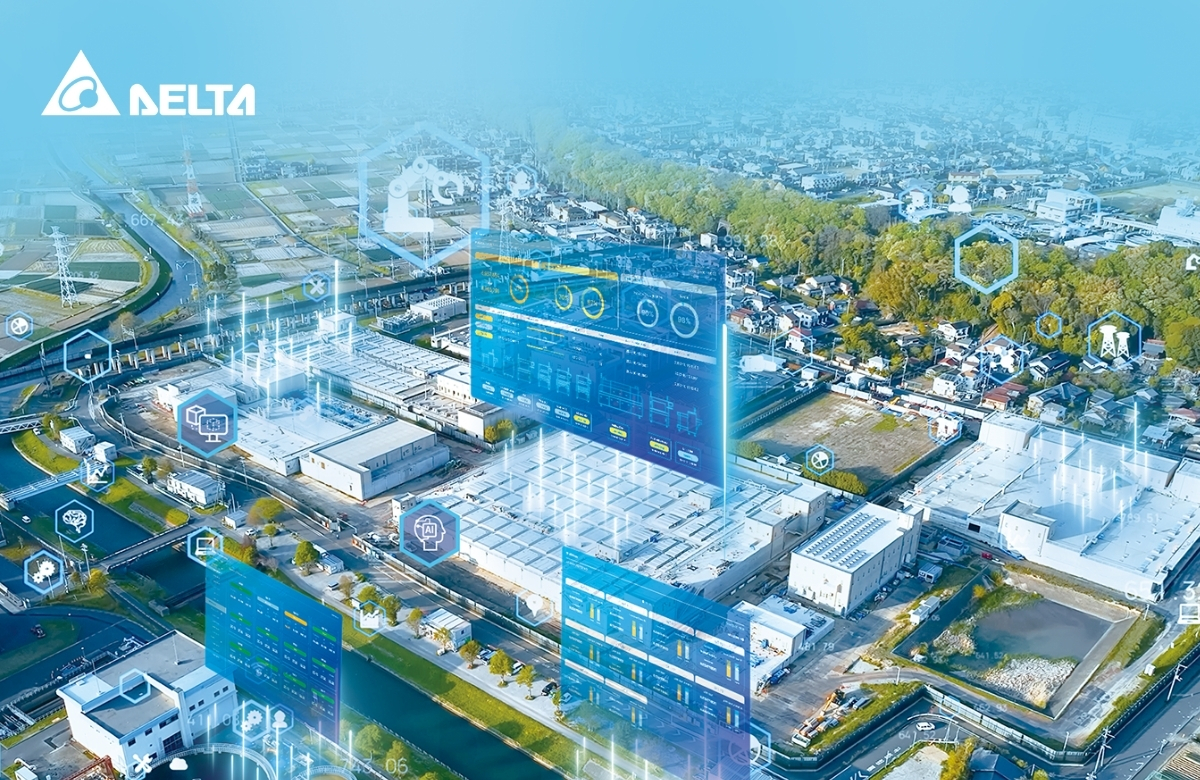
Factories in Southeast Asia are facing a new reality. The electronics industry is growing fast, with annual growth around 10%, driven by demand for semiconductors, PCBs, AI servers, and automotive tech. As production shifts across Southeast Asia, Taiwan, and Mainland China, manufacturers are also dealing with rising energy costs, expanding carbon regulations, and increasing ESG scrutiny. Manufacturers now need to cut emissions, manage risks, and meet global standards across every part of their operations.
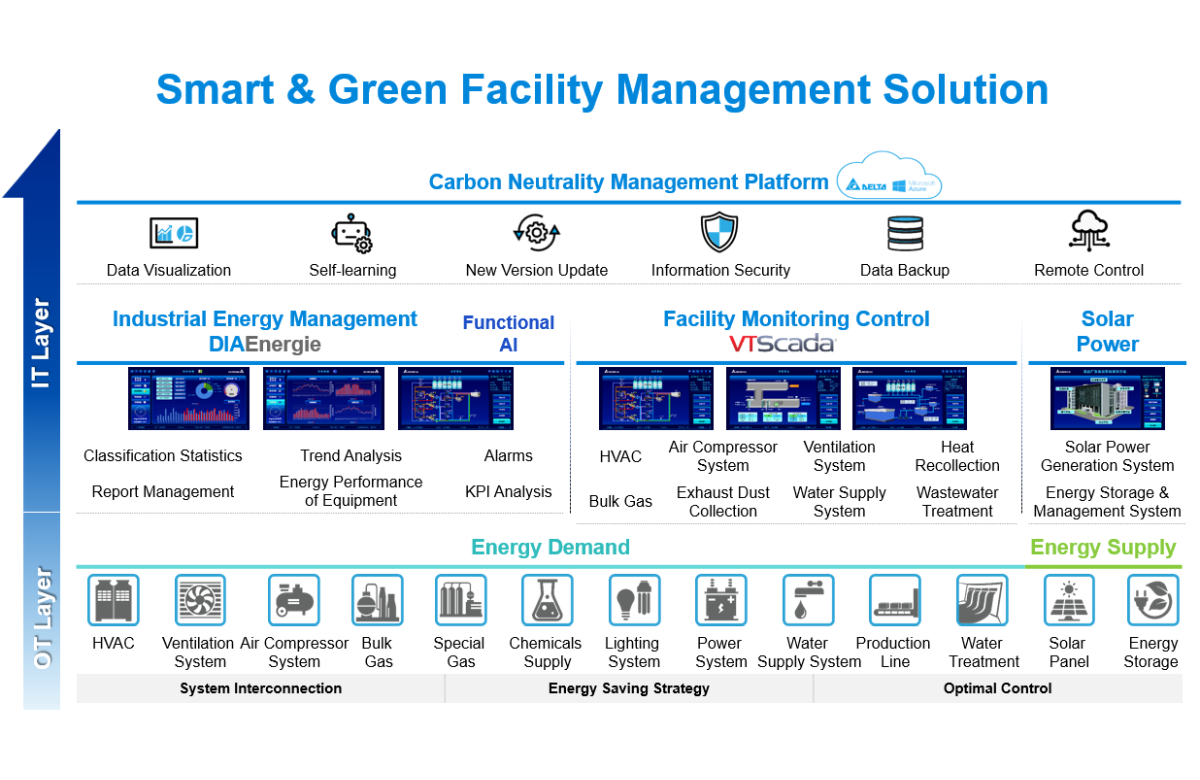
Delta’s Smart Green Factory Solution
Delta’s Smart Green Factory Solution is designed for this shift. It integrates three core systems: Facility Monitoring and Control System (FMCS), Energy Management System (EMS), and Carbon Management System (CMS). Together, they form a comprehensive, data-driven platform that helps factories reduce energy waste, improve safety, and monitor carbon performance in real time.
Firstly, Delta’s FMCS connects HVAC, lighting, water, and power systems into one centralized platform, using AI to monitor and optimize performance in real time. In semiconductor and high-tech industries, cleanroom HVAC alone can account for 40–60% of total electricity use. FMCS helps reduce that load by dynamically adjusting chillers, pumps, and lighting based on occupancy and system demand. Case studies show energy savings exceeding 30%, along with improved safety through automated alerts and emergency response integration.
At the same time, the EMS collects energy data from across the facility and applies AI to forecast demand, detect anomalies, and recommend efficiency improvements. By adjusting motor speeds and optimizing system loads, it can cut electricity use by up to 30 percent while supporting predictive maintenance and cost savings.
Then there’s the CMS that tracks emissions across Scope 1, 2, and 3, integrates with existing systems, and supports ISO-compliant reporting. It helps manufacturers plan reduction strategies, automate carbon audits, and use tools like I-REC certificates and carbon credits to meet net-zero goals.
Real-World Impact
This integrated approach is already delivering results. In a semiconductor facility, Delta applied predictive maintenance and AI optimization to its chiller systems, one of the biggest energy drains in production. The upgrade led to annual energy savings of several million kilowatt-hours, with cost reductions in the tens of millions in local currency.
In another electronics plant, FMCS was used to monitor water quality in cooling towers. The system identified frequent over-refilling caused by poor water conditions. By automating filter cleaning and optimizing refill schedules, the factory reduced water consumption by 20 percent and cut maintenance downtime.
These examples show how smart systems can turn operational inefficiencies into measurable gains, supporting both sustainability goals and business performance.

Built for Global Standards
Delta’s Smart Green Factory Solution is also built for compliance. It aligns with key international standards, including ISO 50001 for energy management, ISO 14064-1 and 14064-2 for greenhouse gas verification and reduction strategy, IEC 62443-3-3 for cybersecurity, and ISO 27001 for information security. It also supports I-REC certification for renewable energy tracking, helping manufacturers meet regulatory requirements, secure global certifications, and build trust with customers and investors.
Whether it’s a single facility or a multi-site operation, Delta’s solution scales to fit. By unifying energy, carbon, and facility data, it helps manufacturers improve efficiency, reduce emissions, and make informed decisions that support long-term sustainability goals.
For a deeper look at the system architecture, case studies, and implementation roadmap, download the full white paper here. Learn more about Delta Electronics’ Industrial Automation solutions here.
